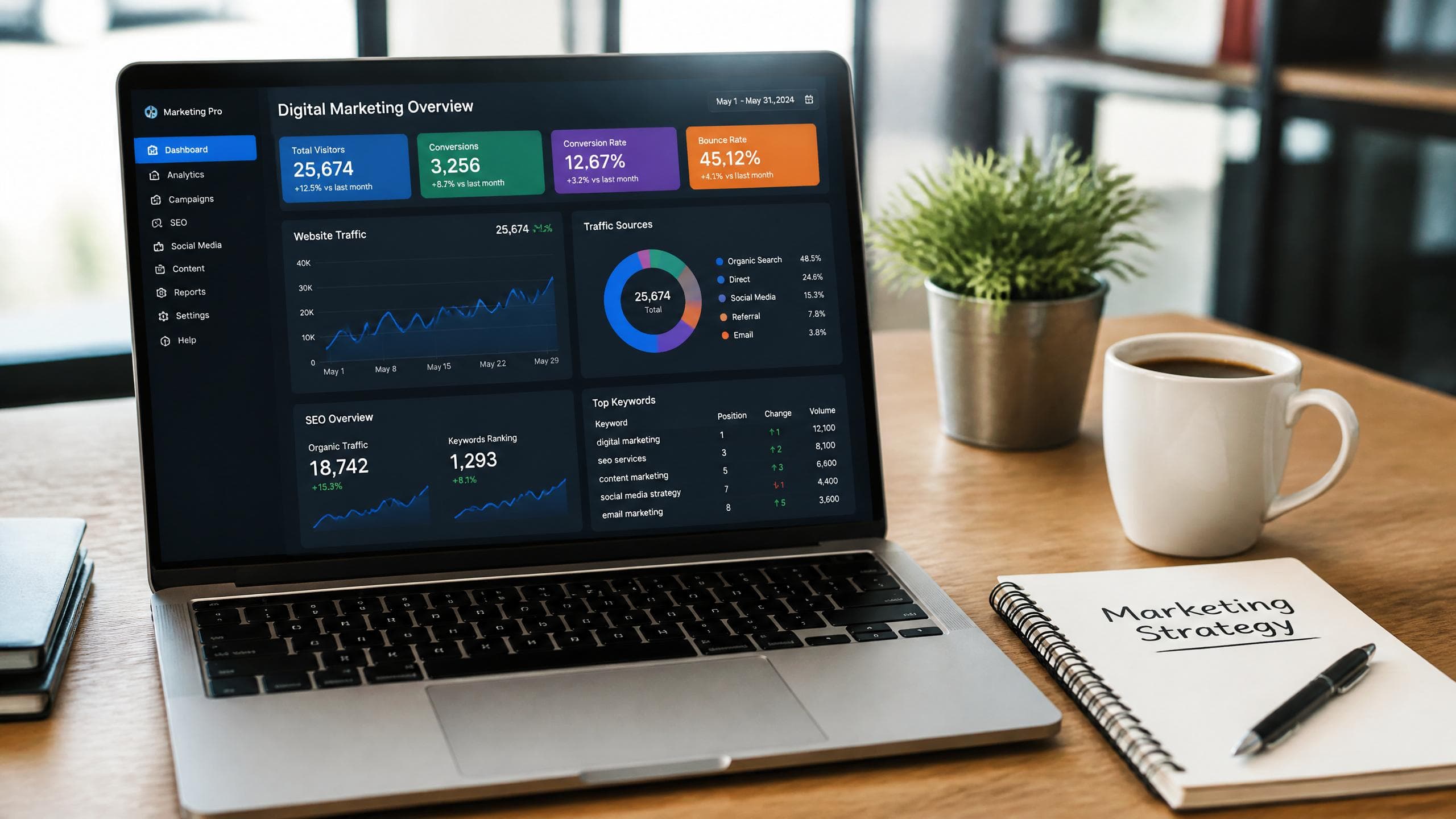
Introduction
Growing a business online takes more than increasing website traffic. Businesses need to attract the right audience, communicate their value clearly, and convert website visitors into qualified leads and customers.
Search Engine Optimization (SEO), paid advertising, and Conversion Rate Optimization (CRO) are often managed separately. However, when these activities work together, businesses can build a more consistent customer journey, make better marketing decisions, and identify opportunities for sustainable growth.
In this guide, we explain how to connect these three essential digital marketing strategies.
SEO: Build Sustainable Organic Visibility
SEO helps your business reach potential customers when they search online for products, services, and solutions.
A successful SEO strategy includes:
Keyword research based on customer intent.
Technical SEO audits and website performance improvements.
On-page optimization for service pages, landing pages, and blog posts.
Content that answers relevant customer questions.
Internal linking and a clear website structure.
Monitoring organic traffic, search impressions, rankings, and conversions.
The objective is not simply to rank for more keywords. It is to attract visitors who are relevant to your business and more likely to take meaningful action.
Paid Media: Reach Your Target Audience
Paid advertising can help businesses reach potential customers through platforms such as Google Ads and social media advertising.
An effective paid media strategy starts with clear business objectives, audience research, appropriate campaign targeting, and accurate conversion tracking.
To improve campaign performance:
Group campaigns around specific products, services, or customer needs.
Match advertisements to relevant landing pages.
Track qualified leads, purchases, and cost per acquisition.
Review search terms, audience performance, and wasted advertising spend.
Test ad copy and landing-page messaging systematically.
Paid media can provide faster feedback than organic search, helping businesses understand which messages and offers resonate with their target audience.
CRO: Turn More Visitors into Customers
Attracting visitors is only part of the growth process. Your website must also make it easy for them to understand your offering and take the next step.
Conversion Rate Optimization focuses on identifying and reducing barriers that prevent visitors from completing desired actions.
Practical improvements include:
Clear headlines and value propositions.
Prominent calls to action.
Simple contact and enquiry forms.
Mobile-friendly page layouts.
Faster page loading and smoother navigation.
Trust-building elements, including genuine reviews and case studies.
A/B testing where sufficient traffic and data are available.
Measure conversions against a clearly defined baseline so that improvements can be evaluated rather than assumed.
Connect SEO, Paid Media and CRO
These channels become more useful when their insights are shared.
SEO research can identify customer questions that inform advertising messages and website content. Paid campaigns can help test messaging and offers. Conversion data can reveal which landing pages and customer journeys need improvement.
For example, if a service page attracts relevant organic traffic but generates few enquiries, the next step may be to investigate the page's messaging, calls to action, form usability, and alignment with visitor intent.
If a paid campaign generates clicks but few qualified leads, review the search terms, targeting, landing page, and conversion tracking before increasing the budget.
Measure What Matters
A connected growth strategy should measure business outcomes, not just marketing activity.
Important metrics include:
Organic traffic and qualified organic leads.
Cost per click and cost per qualified lead.
Landing-page conversion rate.
Lead-to-customer conversion rate.
Customer acquisition cost.
Revenue and return on advertising spend, where reliable revenue attribution is available.
Use analytics and conversion tracking to establish a baseline, monitor progress, and identify where further optimization is needed.
Build a Repeatable Growth Process
A practical integrated marketing process follows four stages.
Audit: Review your website, organic visibility, advertising campaigns, conversion tracking, and customer journey.
Prioritize: Identify the improvements most likely to support your business objectives.
Execute: Implement SEO enhancements, campaign improvements, and landing-page changes.
Optimize: Evaluate results, learn from performance data, and refine the strategy.
This process helps businesses make informed decisions instead of relying on disconnected marketing activities.
Conclusion
SEO builds organic visibility, paid media helps reach potential customers, and CRO improves the experience that turns visitors into leads and customers.
When these disciplines share the same business objectives and performance data, digital marketing becomes more coordinated, measurable, and easier to improve over time.
Ready to Build a More Effective Growth Strategy?
Brandspire Growth helps businesses strengthen their digital presence through SEO, paid media, website optimization, and integrated digital marketing strategies.
Book a Strategy Call to discuss your website, marketing goals, and opportunities for improvement.
About the Author
Brandspire Growth Team
Discover how SEO, paid advertising, and conversion rate optimization work together to attract qualified website traffic, generate leads, improve conversions, and support sustainable business growth.